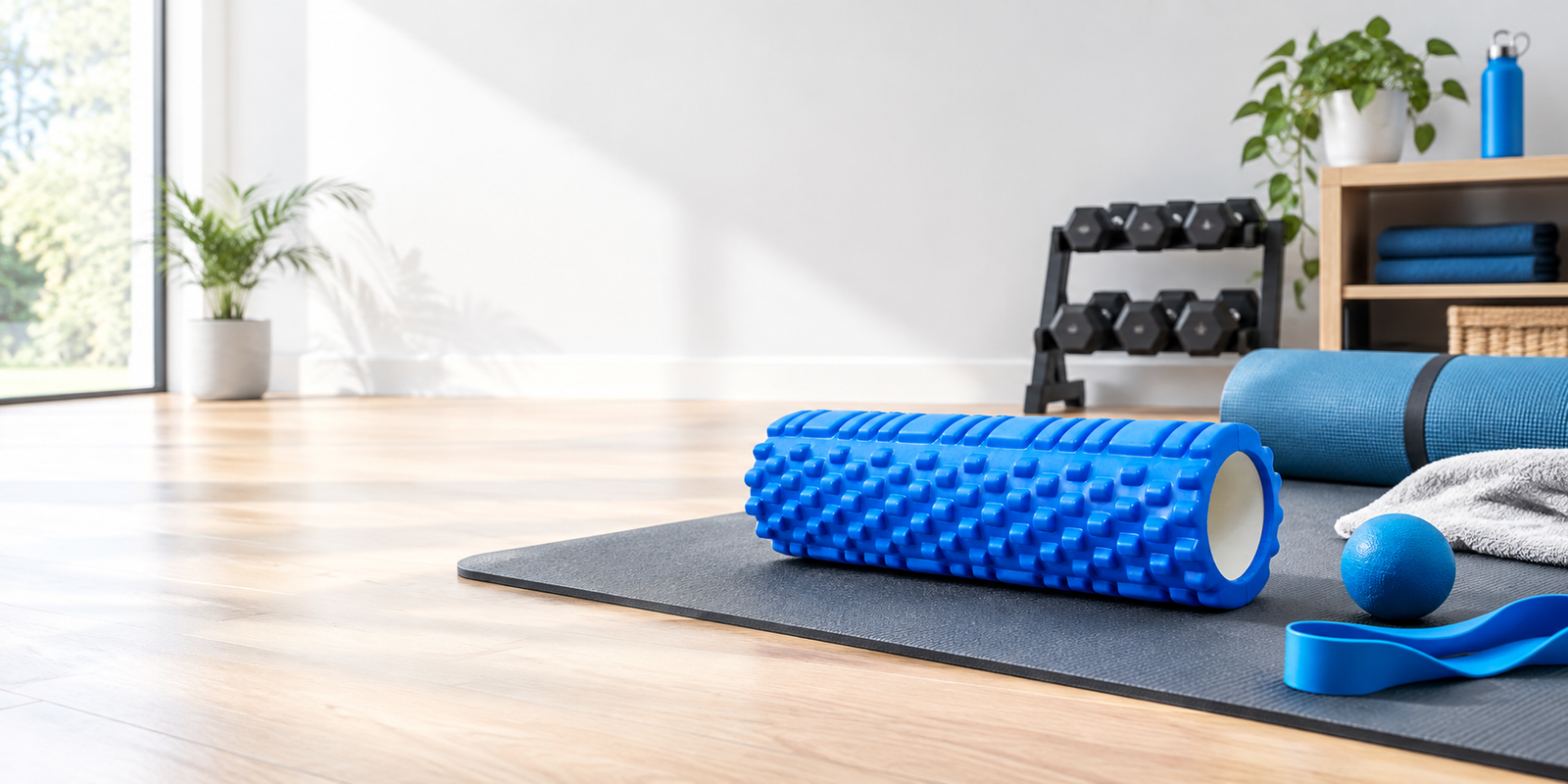

If you’ve watched someone at the gym slowly rolling around on a cylinder of foam and wondered what exactly they were doing to themselves, this is for you. A foam roller is a self-massage tool, you use your own body weight to apply pressure to a muscle, a technique that gets the fancier name “self-myofascial release.” Here’s the honest version of what it does: it won’t fix an injury, it won’t replace an actual warm-up, and one session isn’t going to change anything permanently. What it will do, pretty reliably, is make your muscles feel more ready to move before training and less trashed afterward. That’s a small, real benefit & it’s worth knowing how to use one properly instead of just copying whatever the person next to you is doing.
What Is a Foam Roller and How Does It Work?
A foam roller is a hard tube, about 30cm and 90cm long, that you roll your body over to apply continuous pressure on particular muscle groups. This rests on the principle of self-myofascial release; that is, the fascia (the connective tissue around your muscles) becomes tight and restricted through your training regime, stress or sedentary lifestyle contributing to less mobility and post-exercise soreness. Foam rolling applies controlled pressure which creates a localized compression in the area that will temporarily release that tension, increase blood flow to the tissue & decrease tightness. Athletes & trainers alike will repeatedly point to the same direction that is foam rolling helps most people move better as well as recover more easily when done regularly, which is enough of a reason to know how to use one correctly.
What Are the Benefits of Foam Rolling?
The benefits of a fitness equipment like a foam roller are real, but they’re also specific, and setting accurate expectations from the start makes the habit more sustainable than assuming it’s a cure-all. Most of what foam rolling does works best as part of a broader recovery routine rather than as a standalone fix. Here’s what the evidence and practical experience consistently support:
Temporary Improvements in Range of Motion
Rolling before exercise can loosen up a joint’s range of motion for a while, particularly before exercise. It’s not a structural change; it fades, but if your session needs a lot of hip, shoulder, or thoracic mobility, a few minutes beforehand genuinely helps.
Short-Term Relief From Muscle Soreness
Delayed onset muscle soreness, the stiffness peaking 24–48 hours after a hard session, can feel noticeably reduced with regular foam rolling as part of post-workout gym recovery equipment use. Improved blood flow to the tissue and reduced perceived tightness are the likely contributors. It won’t eliminate soreness entirely, but it consistently takes the edge off.
Preparing the Body for Movement
As part of a warm-up sequence, rolling through major muscle groups helps reduce the stiffness that’s common before training, especially early in the morning or after long periods of sitting. Think of it as a primer for movement, helping the body shift from rest to readiness before the actual warm-up begins.
A Convenient Self-Massage Option
Good recovery equipment doesn’t have to be expensive. A quality foam roller gives you a self-administered soft tissue tool available whenever you need it. A quality recovery equipment Melbourne is a durable option with a grid surface that provides varied pressure, a practical starting point for anyone building a home recovery gear setup.
How to Use a Foam Roller for the First Time
If you’ve never used a foam roller before, the technique feels slightly awkward for the first session or two and becomes intuitive quickly. The goal is to apply controlled, sustained pressure to target muscles, not to rush through it. Here’s how to approach it:
- Start with a comfortable position where the target muscle can rest on the roller without you needing to fight to stay balanced.
- Place the target muscle over the roller. The roller should be making contact with the muscle belly, not a joint or bone.
- Roll slowly through the muscle. Move your body so the roller travels slowly along the length of the muscle, roughly 2–3 centimeters per second.
- Adjust pressure based on comfort. Foam rolling shouldn’t feel comfortable in the way relaxation does; there should be some sensation, but it shouldn’t be sharp or unbearable either.
- Spend more time on areas that feel tight. When you hit a spot that feels notably tighter or more sensitive than the surrounding tissue, slow down and hold the position for 20–30 seconds rather than rolling straight through it.
- Stop if you experience sharp or unusual pain. A dull ache or generalized sensitivity is normal. Sharp pain, nerve sensations, or pain that feels localized to a joint rather than a muscle are signals to stop and seek guidance.
When Should You Use a Foam Roller?
Timing changes how much you get out of it. Before training, five to ten minutes rolling through whatever you’re about to work can knock down stiffness and loosen things up, but it’s a lead-in to your warm-up, not a substitute for one. After training, it slides naturally into a cool-down and takes some sting out of the soreness that’s coming. On rest days, a short session keeps things loose without adding any real load. And if you’ve got dedicated stretching or mobility work planned, rolling first tends to make the tissue more willing to lengthen.
Common Foam Rolling Mistakes Beginners Make
A foam roller is a simple tool, but there are a few consistent errors that reduce its effectiveness or make the experience unnecessarily unpleasant. These are the ones worth knowing from the start:
- Rolling too fast: Moving quickly over the muscle doesn’t give the tissue enough time to respond.
- Using too much pressure: Reducing the load so that the pressure is firm but manageable is more effective than forcing full bodyweight through a spot that’s already reactive.
- Spending too long on one area: Two minutes per muscle group is generally enough. Longer than that tends to produce diminishing returns and can leave the tissue feeling more irritated than before.
- Rolling directly over painful or injured areas: Foam rolling is for muscles in a normal training state, not acutely injured tissue. An inflamed muscle or a recently strained area needs rest, not compression.
- Treating foam rolling as a replacement for a warm-up: Rolling prepares tissue for movement; it doesn’t raise heart rate, activate the nervous system, or rehearse the movement patterns your workout requires.
- Expecting immediate permanent changes: A single session produces temporary effects. The benefit comes from consistency over time, making it a regular part of your gym recovery equipment routine rather than an occasional experiment.
See also: Why Know Your Business Checks Are Critical in Fraud Prevention
Conclusion
A foam roller is about as low-effort and accessible as recovery gear gets. It’s not going to overhaul how you recover overnight, but done consistently and with decent technique, it makes a real difference in how your body feels going into and coming out of training. Start slow, keep the pressure controlled, and let the habit build from there. A recovery range includes foam rollers and complementary recovery gear to support whatever stage of training you’re at, along with a full range of fitness equipment for home and commercial use.


 By



 By