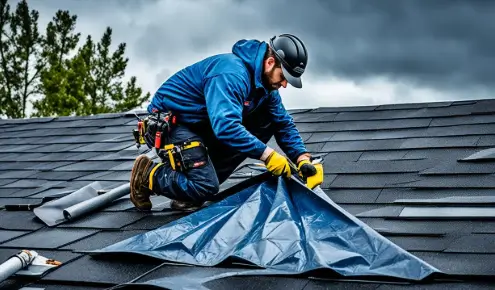

Heavy rain does not always create a roofing problem from scratch. More often, it exposes a weak point that has already been forming for some time. That is why a call for roof repair brigham city often comes after a storm, even though the real damage started earlier through wear around flashing, drainage problems, or aging shingles.
A roof can look fine from the ground and still have a weak spot that lets water in. Heavy rain tends to expose those problems quickly. When a large amount of water moves across the roof at once, areas that seemed stable in dry weather can start to fail. A loose shingle, a lifted piece of flashing, or a clogged gutter may not stand out at first, but during a strong storm, any of them can lead to a leak.
What Heavy Rain Reveals
Repairs are often needed after heavy rain because the storm puts more stress on the roof than usual. It is not always that the roof suddenly fails. More often, the rain pushes against an area that was already starting to wear out. A roof may handle lighter rainfall without any visible issues, then leak once the water comes down harder and faster.
This usually happens around the more vulnerable parts of the roof. Water often gets in where sections meet, where the roof changes slope, or where vents and other features break through the surface. Those areas depend on tight seals and proper water flow. During heavy rain, even a small gap or shift can be enough to allow moisture to work beneath the outer layer.
That is why homeowners are often surprised. They assume the storm caused sudden damage, when in reality it exposed a part of the roof that had already lost some of its ability to shed water cleanly.
Weak Spots Around Openings
Roof penetrations are some of the first places to inspect after a storm. Vents, pipes, skylights, and chimneys interrupt the roof surface. Each one relies on flashing, sealants, and carefully layered materials to keep water moving in the right direction.
When those materials age, even a narrow opening can matter. Sealant can dry out and pull away. Metal flashing can shift slightly. Surrounding shingles can crack or lose adhesion. Under normal conditions, these issues may not show up indoors right away. During heavy rain, they often do.
Water does not need a large hole. It only needs enough space to get past the outer barrier. From there, it may travel along decking or framing before appearing on a ceiling or wall. That delayed path is one reason the source of a leak can be difficult to identify without a close inspection. The stain inside the home may be several feet from where the rain first entered.
Drainage Changes Everything
Drainage problems are another major reason repairs follow a storm. A roof is meant to quickly move water off the surface. When that process slows down, the chance of intrusion goes up.
Gutters filled with debris can force water to back up near the lower edge of the roof. If runoff cannot exit the way it should, that edge stays wet longer than intended. The same problem can happen when downspouts are blocked or when sections of gutter begin to pull away and lose alignment. Instead of directing water away, the system allows moisture to collect near fascia, soffit areas, and shingle edges.
Heavy rain makes these failures obvious because the roof has no margin for delay. Water that should be draining freely starts to pool or spill in the wrong places. Once that happens, vulnerable sections remain saturated, and repeated exposure begins to wear down the surrounding materials more quickly.
This is one of the clearest examples of why roofing repairs after rain are not always about obvious storm damage. Sometimes the issue is poor water movement. The storm simply made it visible.
Why Small Damage Spreads
Once water gets below the roof covering, the damage can spread beyond the original entry point. Moisture may soak into the decking, reach the insulation, and weaken the nails or fasteners holding the shingles in place. As those underlying materials begin to soften, the section above them becomes less secure.
That is why a small sign indoors can point to a larger problem. A ceiling stain may be the first visible clue, but it does not show how much moisture has moved through the layers beneath the roof surface. During heavy rain, that same weak area can take in even more water, allowing the damage to spread.
Repair costs often rise because the issue is not limited to the spot where the leak becomes visible. By the time water appears inside, the work may involve more than replacing a few shingles. Flashing, underlayment, decking, and nearby trim may all need to be checked and repaired.
See also: Designing a Home Around How You Actually Live
What to Check After a Storm
After heavy rain, it helps to pay attention to subtle signs rather than waiting for an obvious drip. Stains on the ceiling, damp insulation, peeling paint near the tops of the walls, or a musty smell in the attic can all indicate moisture getting in. Outside, watch for curled shingles, areas where granules have worn away, flashing that has shifted, or gutters that overflow during rain.
It also makes sense to start with the parts of the roof that usually wear out first. Roof openings, outer edges, and drainage areas tend to be more vulnerable than the main surface. Catching trouble in those spots early can keep the repair smaller and easier to manage.
For homeowners searching for roof repair brigham city, timing matters almost as much as the repair itself. Waiting through multiple storms can allow hidden moisture to spread into materials that were still salvageable the first time water got in.
Conclusion
Heavy rain is often the moment a roofing problem becomes impossible to ignore, but it is rarely the only cause. In many cases, the storm reveals a weakness that has been developing around flashing, roof penetrations, or drainage areas long before the first interior stain appears.
That is why repairs after a storm should not be treated as overreactions. They are often the practical response to water finding an existing opening. The sooner that weak point is identified and corrected, the better the chance of keeping the repair focused, protecting the structure beneath the roof, and preventing the next round of rain from doing more damage.

 By
By




 By
By